Last updated · Dr. Jon Barnes, DDS
You’ve thought about straightening your teeth for years — but the idea of metal brackets and wires at your age (or in your line of work) stops you cold. That’s exactly the problem Invisalign in Mustang, OK is designed to solve: clear, removable aligners that move your teeth gradually, without announcing the treatment to everyone you meet. Here’s an honest look at living with Invisalign: how it works, who it’s for, and what treatment looks like at Buffalo Creek Dental.
How Invisalign Works
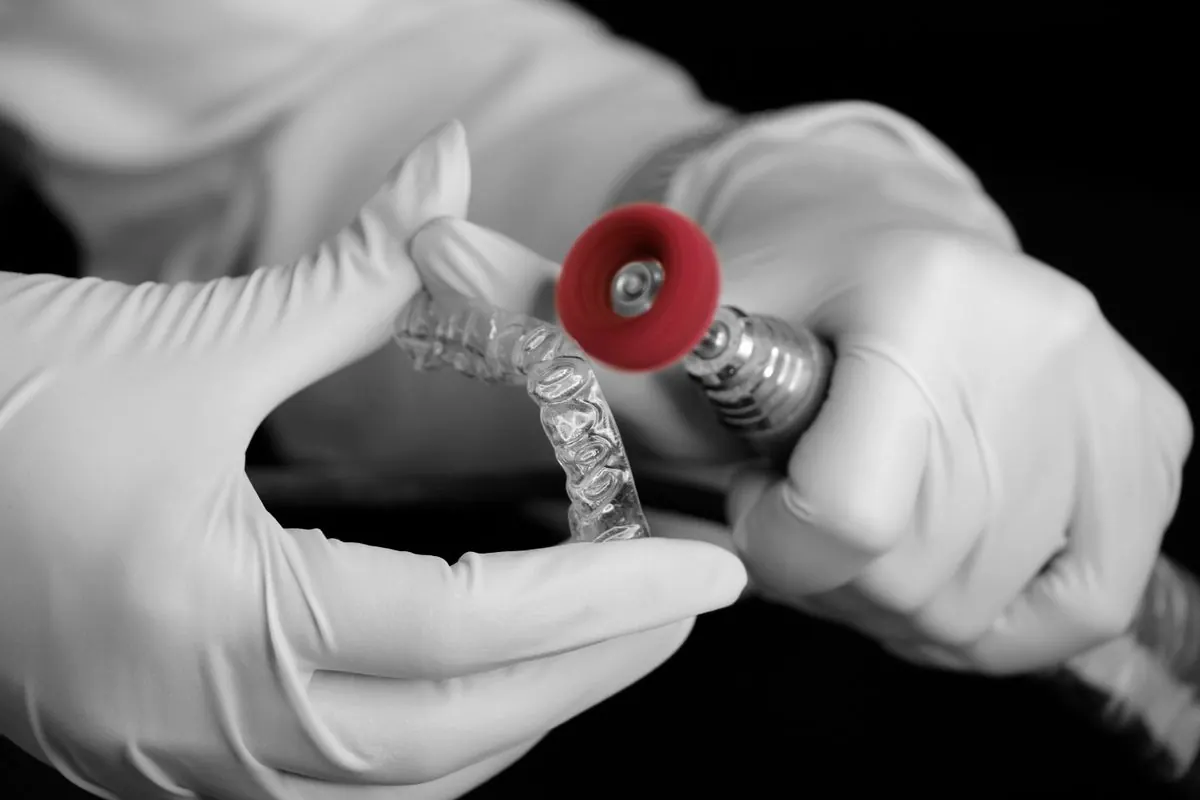
Invisalign straightens teeth with a series of custom-made clear aligner trays, each one slightly different from the last. You wear each set as directed — about 22 hours a day — and the gentle, steady pressure nudges your teeth progressively closer to their ideal positions. When one set has done its job, you move to the next. The American Association of Orthodontists has a helpful overview of clear aligners if you want more background.
At Buffalo Creek Dental, the process starts with a digital scan of your teeth, which is used to map out your treatment from start to finish. That plan determines exactly how many sets of aligners you’ll need and in what order you’ll wear them. Each aligner is typically worn for about two weeks before being replaced with the next one in the series. When a new aligner goes in, it usually feels snug at first — a sign it’s doing its job — and settles in over the following days.
There are no brackets to bond, no wires to tighten, and no emergency visits for a poking wire. Check-in appointments are generally short: Dr. Barnes confirms your teeth are tracking as planned and hands you your next sets of aligners.
What Can Invisalign Treat?
Invisalign handles many of the same alignment issues as traditional braces, including:
- Crowded teeth — when there isn’t enough room for all your teeth to sit comfortably.
- Gaps and spacing — extra space between teeth that collects food or affects your bite.
- Overbite — upper front teeth that overlap the lower teeth too much.
- Underbite — lower teeth that sit in front of the upper teeth.
- Crossbite — some upper teeth sitting inside the lower teeth when you bite down.
- Open bite — front teeth that don’t meet when your back teeth are closed.
That said, Invisalign isn’t the right answer for every case. Severe bite problems, teeth that need significant rotation, or cases requiring major jaw movement may need traditional orthodontics. An honest evaluation matters here: at your consultation, Dr. Barnes will tell you plainly whether Invisalign can get you where you want to go — and if it can’t, he’ll tell you that too.
Why So Many Adults Choose Invisalign
Most of our Invisalign patients are adults who want a straighter smile without the look or lifestyle of braces. The reasons are practical:
- It’s discreet. The aligners are clear and sit flush against your teeth. Most people you talk to won’t notice you’re wearing them.
- It’s removable. You take aligners out to eat, drink anything other than water, brush, and floss. No food restrictions, no special cleaning tools — you keep your normal oral hygiene routine.
- It’s comfortable. Smooth plastic trays mean no metal brackets irritating your cheeks and lips, and no tightening appointments.
- It fits a busy schedule. With no wire adjustments, check-in visits are quick and infrequent compared to braces.
One more advantage of doing Invisalign with your general dentist: your whole mouth is under one roof. If a cavity needs filling or a tooth needs a crown mid-treatment, it’s handled right here instead of shuttling between offices.
What Treatment Looks Like at Buffalo Creek Dental
If you’re considering Invisalign with us, here’s the typical path:
- Consultation and evaluation. Dr. Barnes examines your teeth, bite, and overall oral health to confirm you’re a candidate. Existing dental work that needs attention gets addressed first.
- Digital records and treatment plan. A digital scan of your teeth is used to design your custom aligner sequence — you’ll see a preview of how your teeth are expected to move.
- Your first aligners. You’ll get your initial sets with clear instructions on wear time, switching schedule, and care.
- Progress check-ins. Short appointments to confirm everything is tracking as planned and to pick up your next sets.
- Retainers. Once treatment is complete, retainers keep your teeth in their new positions. This step matters — teeth have a memory, and retainers are what lock in your result.
Living With Invisalign: What to Actually Expect
Wear time matters most. Aligners only work while they’re in. Aim for about 22 hours a day — out only for meals and oral hygiene. Patients who fall short on wear time are the most common reason treatment takes longer than planned.
The first few days of each new set. Mild pressure or tenderness when you switch to a new set of aligners is normal and usually fades within a day or two. It’s the feeling of teeth moving — which is the point.
Cleaning is simple. Rinse aligners when you take them out, brush them gently (not with toothpaste, which can scratch), and keep them in their case — never in a napkin. Lost or damaged aligners happen; call us and we’ll advise whether to move to the next set or order a replacement.
Eating and drinking. Remove aligners for anything other than water. Hot drinks can warp the plastic, and colored drinks or food can stain the trays.
Speech. Most patients adjust within a day or two. A very slight lisp at first is common and resolves quickly.
How Long Does Treatment Take?
It depends entirely on what needs to move. Minor crowding or spacing may take several months; more involved cases can take a year or longer. Your custom treatment plan includes a projected timeline — and the single biggest factor in hitting it is consistent wear time. We’ll give you an honest estimate at your consultation based on your specific teeth, not a one-size-fits-all number.
Invisalign and Your Overall Smile
Straight teeth are easier to keep clean — there’s simply less crowding for plaque to hide in — which is one reason orthodontic treatment often goes hand in hand with preventive care. Many patients also choose to finish treatment with professional teeth whitening for a full smile refresh, or ask about veneers for teeth with chips or shape issues that alignment alone can’t fix. We’ll talk through the whole picture, including our other cosmetic dentistry options, at your consultation so your treatment plan matches your actual goals.
Frequently Asked Questions
Does Invisalign hurt?
Not in the way most people fear. You’ll feel pressure or mild soreness for a day or two each time you switch to a new set of aligners — that’s the teeth moving. There are no brackets or wires, so the cheek and lip irritation common with braces isn’t an issue.
Can I eat whatever I want with Invisalign?
Yes — because you take the aligners out to eat. There are no food restrictions the way there are with braces. Just brush before putting the trays back in.
Will people be able to tell I’m wearing aligners?
The trays are clear and fit snugly over your teeth. Most people won’t notice them in normal conversation. Small tooth-colored attachments are sometimes used to help certain teeth move — Dr. Barnes will tell you if your plan includes them.
What happens if I lose an aligner or don’t wear them enough?
Call us. Depending on where you are in your sequence, you may move to the next set early or need a replacement made. If wear time has been inconsistent, your teeth may not be tracking with the plan, and we’ll reassess. The sooner we know, the easier the fix.
Do I still need retainers after Invisalign?
Yes. Retainers hold your teeth in their new positions while the surrounding bone and tissue stabilize. Skipping retainers is the most common reason teeth shift back after treatment.
Ready for a Straighter Smile?
Invisalign is one of the most straightforward upgrades you can make to your smile — discreet, removable, and handled right here in Mustang by a dentist who already knows your mouth. If you’re in Mustang, Yukon, Tuttle, or the greater OKC area, we’d love to talk through whether it’s right for you.
Book online, call Buffalo Creek Dental at (405) 353-1333, or reach out through our contact page to schedule your Invisalign consultation with Dr. Jon Barnes. Our office at 201 S. Sara Rd., #140, Mustang, OK 73064 is ready when you are. Ask about our current Invisalign special when you book.