Last updated · Dr. Jon Barnes, DDS
Thinking about brightening your smile? Professional teeth whitening in Mustang, OK is one of the fastest, most straightforward ways to refresh your appearance — often in a single visit. But with so many options on store shelves, it’s worth comparing professional whitening vs store kits: what in-office treatment actually does, how it differs from drugstore products, and whether it’s the right choice for you.
Why Teeth Become Stained or Discolored
Teeth don’t stay naturally bright forever, and that’s completely normal. The most common culprits behind staining:
- Foods and drinks — coffee, tea, red wine, berries, tomato sauces, and dark sodas are all known stainers.
- Tobacco use — both smoking and smokeless tobacco leave deep, stubborn discoloration.
- Aging — over time, the outer enamel layer thins, revealing more of the naturally darker dentin underneath.
- Medications — certain antibiotics (notably tetracycline taken during childhood) and other prescriptions can cause internal discoloration.
- Dental trauma — an injury to a tooth can change its color as the inner structures respond.
Surface stains respond well to whitening. Deeper discoloration — the kind that comes from medication or trauma — may not. That’s one reason a professional evaluation matters: Dr. Barnes can tell you which type of staining you have and what realistic results look like.
How Professional Whitening Works
Professional whitening uses a professional-grade whitening gel applied to the teeth. The active ingredients work by gently breaking down stain molecules in the enamel, lightening the overall shade of the tooth. Unlike abrasive whitening toothpastes, which mostly polish away surface stains, professional whitening actually lifts discoloration from within the enamel. The American Dental Association’s teeth whitening guide explains the different options in more detail.
Before whitening begins, your gums and soft tissues are protected, and the gel is applied in a controlled, even way. Dr. Barnes monitors the process throughout, so the treatment is applied safely and consistently.
Professional Whitening vs Store Kits: Key Differences
Whitening strips and tray kits from the store can produce some brightening, but there are meaningful differences:
- Strength and control. In-office professional whitening uses stronger formulations than over-the-counter products, applied in a controlled setting with your gums protected.
- Fit. One-size-fits-all strips can leave uneven results, especially if your teeth aren’t perfectly aligned. Professional treatment covers every visible surface evenly.
- Safety and supervision. With professional whitening, a dentist evaluates your teeth first, screens for cavities, cracks, and gum disease that whitening could irritate, and monitors you during treatment.
- Speed. Store-bought kits typically require weeks of daily use to show results. Professional whitening is designed to produce visible change in a single appointment.
Whitening toothpaste deserves a mention too: it can help maintain results by polishing away new surface stains, but it doesn’t change the intrinsic shade of your teeth the way professional treatment does.
What Happens at Your Whitening Appointment
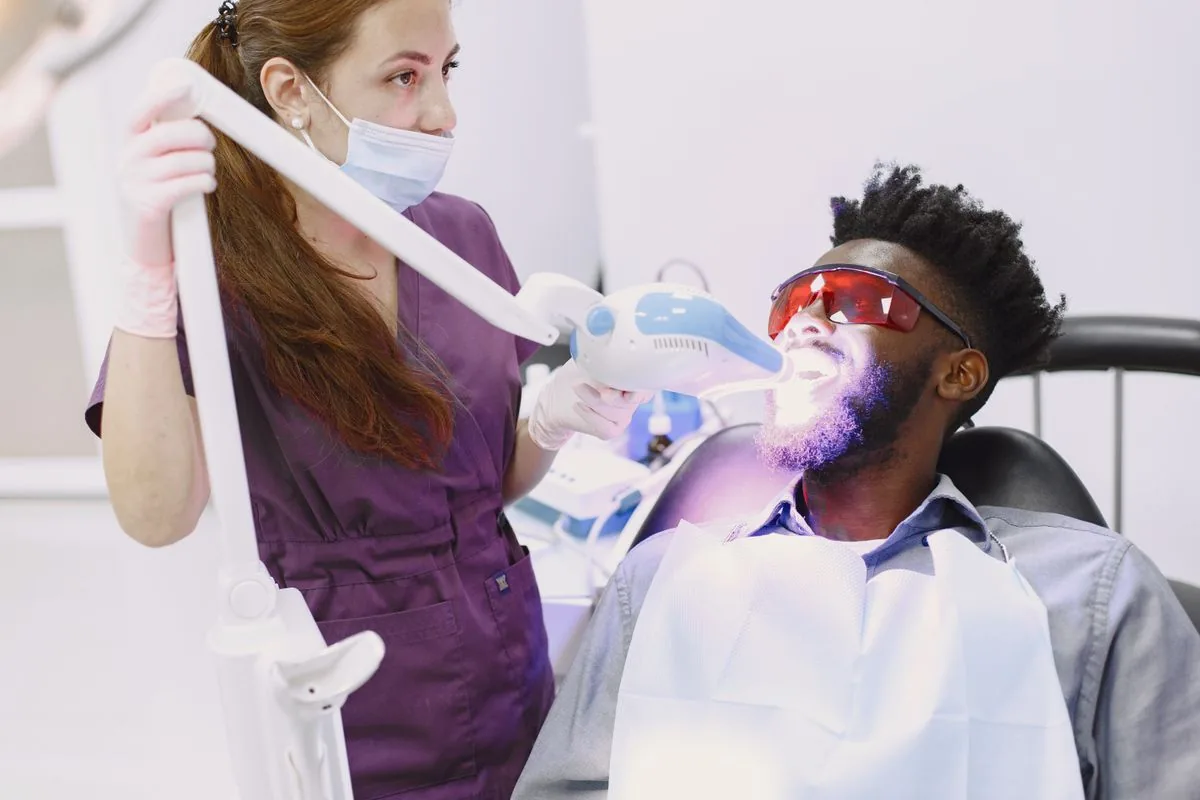
A typical in-office whitening visit at Buffalo Creek Dental goes like this:
- Evaluation. Dr. Barnes checks your teeth and gums to make sure whitening is safe and appropriate for you. Existing cavities or gum disease need to be addressed first.
- Shade documentation. Your current tooth shade is recorded so you can compare before and after.
- Protection. Your gums, lips, and soft tissues are covered to protect them during treatment.
- Gel application. The professional whitening gel is applied to your teeth in an even layer.
- Monitoring. The gel works while Dr. Barnes and the team monitor progress, reapplying as needed per the treatment protocol.
- Rinse and review. The gel is removed, and you’ll see your new shade right away.
Some patients experience mild, temporary sensitivity afterward. This is normal and typically fades within a day or two. We’ll talk through what to expect and how to manage it comfortably.
How Long Do Results Last?
Professional whitening isn’t permanent, but results can last a long time with good habits — often a year or more before a touch-up is needed. How long your results last depends on:
- Your diet — regular coffee, tea, or red wine drinkers tend to see staining return sooner.
- Tobacco use — continued tobacco use will re-stain teeth.
- Home hygiene — consistent brushing and flossing slow down the return of stains.
- Maintenance — periodic touch-ups keep your smile at its brightest.
If you have a wedding, graduation, job interview, or photos coming up, schedule your whitening appointment a week or two ahead so any temporary sensitivity has fully resolved.
Keeping Your Smile Bright After Whitening
A few simple habits go a long way:
- Rinse or brush after drinking coffee, tea, or red wine (consider using a straw for iced drinks).
- Keep up with regular dental cleanings — professional cleanings remove the surface stains that dull your smile over time.
- Brush twice daily with a fluoride toothpaste, and don’t skip flossing.
- If you notice your smile dulling, ask about touch-up options at your next visit.
Is Professional Whitening Right for Everyone?
Whitening is a great fit for many people, but not all. It’s generally not recommended for:
- Children under a certain age (Dr. Barnes can advise on timing).
- Patients with untreated cavities or active gum disease — these need treatment first.
- People who are pregnant or nursing (out of caution).
- Teeth with certain types of internal discoloration that whitening won’t correct.
One important note: whitening doesn’t change the color of existing dental work — crowns, veneers, fillings, and bonding stay the shade they are. If you have visible restorations on your front teeth, Dr. Barnes will help you plan whitening around them, sometimes combining whitening with updating older restorations for a uniform result.
Frequently Asked Questions
Does professional teeth whitening hurt?
Most patients feel little to no discomfort during treatment. Some notice mild, temporary sensitivity to hot or cold afterward, which typically fades within a day or two.
How much whiter will my teeth get?
It depends on the type and depth of your staining. Many patients see a visible, meaningful difference in a single visit. At your evaluation, Dr. Barnes will give you an honest sense of what to expect based on your teeth.
Is teeth whitening bad for enamel?
When done professionally with your gums protected and your teeth evaluated first, whitening is considered safe for enamel. Overusing abrasive whitening products at home is a different story — another reason to have it done under dental supervision.
Can I whiten my teeth if I have veneers or crowns?
Whitening only affects natural tooth structure, not restorations. If your front teeth include crowns or veneers, talk to Dr. Barnes first — he can help you plan for a uniform, natural-looking result.
How often can I get my teeth whitened?
That depends on your oral health and how quickly staining returns. For most people, an annual touch-up maintains a bright smile. Dr. Barnes will recommend a schedule that fits your teeth and habits.
Brighten Your Smile in Mustang
Professional teeth whitening is a simple, effective way to feel more confident in your smile — for photos, events, or just everyday life. Whitening can also be one step in a bigger smile plan that includes veneers, tooth-colored fillings or Invisalign; see our cosmetic dentistry in Mustang page. If you’re in Mustang, Yukon, Tuttle, or the greater OKC area, we’d love to help.
Book online, call Buffalo Creek Dental at (405) 353-1333, or visit us at 201 S. Sara Rd., #140, Mustang, OK 73064 to schedule your whitening consultation with Dr. Jon Barnes. You can also reach us through our contact page. Hours: Monday–Wednesday 8 a.m.–5 p.m., Thursday 7 a.m.–3 p.m., and Friday 8 a.m.–noon.