
Last updated · Dr. Jon Barnes, DDS
If you wear dentures, or you’ve just been told you need them, you’ve probably heard about “snap-on” dentures. So how do snap-on dentures vs regular dentures really compare? The short answer: a regular denture rests on your gums and is held by suction and fit, while a snap-on denture clips onto a few dental implants so it stays put when you eat and talk.
Below, our team at Buffalo Creek Dental in Mustang, OK, explains what that difference means day to day, what affects cost, and how to decide.
Snap-On Dentures vs Regular Dentures: The Basic Difference
Both types replace a full arch of missing teeth with custom teeth set in a gum-colored base. Both are removable, so you take them out to clean them. The difference is what holds them in place. You can see all of the options side by side on our dentures page.
- Regular (traditional) dentures sit on your gums and are held by suction and a close fit. There’s no surgery and no healing period before you get your teeth.
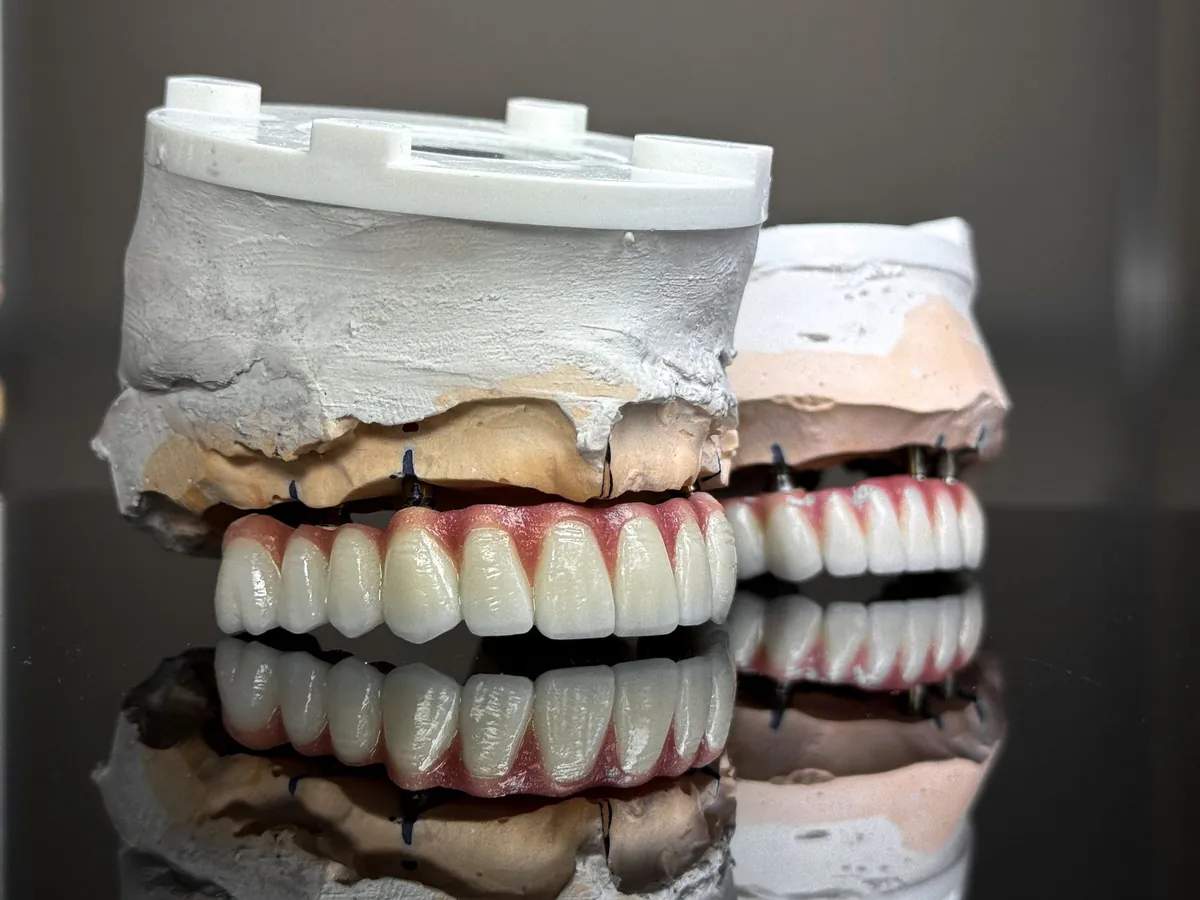
- Snap-on (implant-stabilized) dentures have small attachments on the underside that click onto dental implants placed in your jawbone. A lower snap-on denture commonly uses two implants, sometimes more, and an upper one often uses four.
- Fixed implant teeth, such as All-on-4, are a third option. The arch is secured to implants and only your dentist removes it. It’s a different category from a snap-on denture, but it’s worth knowing about while you compare.
How Regular Dentures Work, and Where They Fall Short
A well-made traditional denture can look natural and work well, especially on the upper jaw. The upper denture covers the roof of your mouth, which gives it a large surface for suction. Many people do fine with an upper denture for years.
The lower jaw is a different story. A lower denture has a narrow ridge to sit on, and your tongue and cheeks move right next to it. That’s why the most common complaint we hear is a lower denture that floats, shifts or rubs when you chew or talk. Adhesive can help, but it doesn’t fix the underlying problem.
There’s also a slow change you can’t see. After teeth are lost, the jawbone that held them gradually shrinks. A denture resting on the gums doesn’t stop that, so over time the fit loosens and the denture may need to be relined or remade. The American Dental Association’s guide to dentures covers this and other basics of denture care.
How Snap-On Dentures Work
A snap-on denture looks much like a regular denture, but it has small attachments built into the underside. Those attachments clip onto matching parts on top of the implants in your jaw. You press the denture into place until it snaps, and you unsnap it to take it out for cleaning and at night.
A dental implant is a small titanium post that acts like a tooth root. After it’s placed, the bone bonds to it over a few months, and then it can anchor your denture.
Dr. Jon Barnes places many implants right here in our Mustang office under local anesthesia, with laughing gas available if you’re nervous. Larger or more complex cases may be referred to the oral surgeon next door, and Dr. Barnes coordinates every step. If you’d like the full picture, read our post on how dental implants work, or see the Mayo Clinic’s overview of dental implant surgery.
Side-by-Side: What Changes Day to Day
Stability When You Eat and Talk
This is the biggest difference. Because a snap-on denture is held by implants in bone rather than by suction alone, it stays in place much better while you bite, chew and speak. Dr. Barnes often recommends at least two implants under a lower denture for exactly this reason: it removes much of the movement people dislike.
Chewing and Food Choices
Many regular denture wearers avoid foods like apples, corn on the cob, steak or crusty bread. A more stable denture usually makes chewing easier, so many people find they can enjoy a wider range of foods again. Results vary from person to person.
Adhesive
Some regular denture wearers rely on adhesive every day. With a snap-on denture, the attachments do most of the work of holding it in place.
Your Jawbone
Implants give the jawbone some of the stimulation a natural root would. That can help slow the bone loss that follows tooth loss in the areas where the implants sit, which a regular denture can’t do.
Treatment Time
A regular denture doesn’t require implant surgery, so it’s usually the quicker path to new teeth. A snap-on denture adds implant placement and a healing period of a few months. If you need a bone graft first, that adds time too. Dr. Barnes does bone grafts here in our office when they’re needed.
Care and Maintenance
Both types come out every day for cleaning, and both need regular checkups. A snap-on denture also has small inserts inside the attachments that wear over time and get replaced at maintenance visits. You’ll also clean gently around the implants, just as you would around natural teeth.
What Affects the Cost of Each Option
Every mouth is different, so we don’t quote a price before an exam. A regular denture generally costs less up front because there’s no implant surgery. A snap-on denture adds the cost of the implants and attachments, but it’s often more affordable than a fixed full arch. The main things that affect your cost are:
- Whether you need a new denture or your current one can be adapted
- Whether any teeth need to be removed first (see our tooth extraction guide)
- How many implants your jaw needs, and whether a bone graft is required
- Whether your case is placed here or referred to the oral surgeon next door
- Your dental insurance benefits
After your consultation, you’ll get a written treatment plan with every fee listed before anything begins. Many PPO plans help pay for dentures and part of implant treatment, and we file your claims for you. We also accept cash, credit cards, CareCredit, Cherry payment plans and some in-house finance options. See our dental insurance and financing and payment options pages. Current special: $500 off a dental implant, cash price only, not eligible with insurance participation. See our specials for details.
Which Denture Option Is Right for You?
There’s no single right answer. It depends on your health, your bone, your budget and what bothers you most about your current teeth. In general:
- A regular denture may be a good fit if you want to avoid surgery, need a faster or lower-cost option, or already have an upper denture that holds well.
- A snap-on denture may be a good fit if your lower denture moves when you eat or talk, you’re tired of adhesive, or you want more confidence chewing while still being able to take your teeth out to clean them.
- A fixed arch may be a good fit if you want teeth that never come out at home. Learn more about All-on-4 in Mustang.
Smoking, uncontrolled diabetes and some medications can slow healing after implant surgery, so Dr. Barnes reviews your health history and imaging before recommending implants. If you’re comparing full and partial dentures too, our post on full vs partial dentures walks through that choice.
What to Expect at a Denture Consultation in Mustang
Your visit starts with an exam, X-rays and a conversation about your goals and budget. If you’re considering implants, Dr. Barnes checks the bone where they would go. We use digital scans to record your bite and the shape of your gums, so there’s no goopy putty. Before your final denture is made, you get to preview the teeth for fit and appearance. After delivery, we schedule follow-ups to smooth any sore spots while you adjust.
Patients come to our office from all around Mustang, as well as Yukon, Tuttle and southwest Oklahoma City.
Frequently Asked Questions
Can my current denture be turned into a snap-on denture?
Sometimes. If your denture fits well and is in good shape, it may be possible to add attachments after the implants heal. If it’s worn or loose, a new denture is often the better choice. Dr. Barnes will check yours at your consultation.
How many implants does a snap-on denture need?
A lower snap-on denture commonly uses two implants, sometimes more. An upper one often uses four, because the upper jawbone tends to be less dense. Dr. Barnes plans the number and position of implants around your bone and bite.
Do I take a snap-on denture out at night?
Yes. A snap-on denture is removable. You take it out to clean it every day, and we usually recommend leaving it out at night so your gums can rest.
Is getting implants for a snap-on denture painful?
Implants are placed under local anesthesia, and laughing gas is available in our office if you’re nervous. Most people have some soreness and swelling for a few days afterward. We’ll give you clear aftercare instructions.
Does dental insurance cover snap-on dentures?
Many PPO plans help pay for dentures and part of implant treatment, but coverage varies a lot by plan. Call our front office team at 405-353-1333 with your plan name and member ID, and we’ll check your benefits and give you a written estimate before treatment.
Talk With Dr. Barnes About Your Denture Options
If your denture slips, rubs or keeps you from eating what you like, you don’t have to just live with it. Book a denture consultation online in about a minute, or call Buffalo Creek Dental at 405-353-1333. Dr. Barnes will explain the trade-offs of each option honestly, including comfort, care and cost, so you can choose what fits your life.
Buffalo Creek Dental is at 201 S. Sara Rd., #140, Mustang, OK 73064, right next to the SSM Health complex. Hours: Monday–Wednesday 8:00 am – 5:00 pm, Thursday 7:00 am – 3:00 pm, Friday by appointment. We welcome patients from Mustang, Yukon, Tuttle and the greater Oklahoma City area. See location and hours. Treatment is provided by Jon Barnes, DDS, general dentist. Individual results vary, and Dr. Barnes recommends treatment only after an exam.
Written and reviewed by Dr. Jon Barnes, DDS. Last updated November 3, 2026.