
Last updated · Dr. Jon Barnes, DDS
If you’re considering an implant to replace a missing tooth, you may hear that you need a bone graft first. Bone grafts for dental implants are common, and they’re often the step that makes an implant possible when the jawbone has thinned. At Buffalo Creek Dental in Mustang, OK, Dr. Jon Barnes does bone grafts right here in our office. Here’s a plain-language guide to why bone is lost, when a graft is needed and what healing looks like.
Why the Jawbone Shrinks After Tooth Loss
Your jawbone stays strong because tooth roots stimulate it every time you chew. When a tooth is lost or removed, that stimulation stops, and the bone in that spot slowly starts to shrink. Much of the change can happen in the first months after an extraction, and it continues over time.
Gum disease, infection, injury and years of wearing a denture can also wear away bone. The longer a space has been empty, the more likely it is that some rebuilding is needed before an implant can go in.
When Are Bone Grafts for Dental Implants Needed?
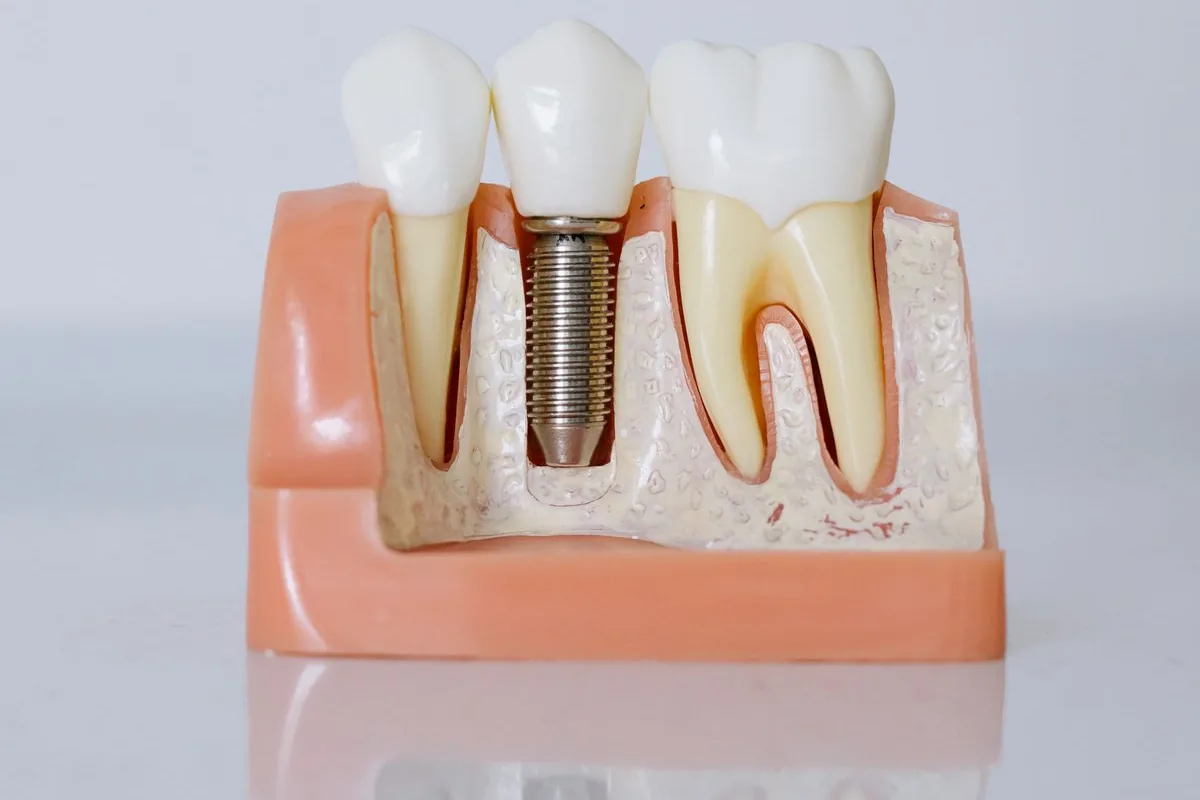
A dental implant is a small post that acts like a tooth root. It needs enough bone around it, in both height and width, to fuse solidly and stay stable for the long term. If the bone is too thin, too short or too soft, a graft builds it back up first.
Dr. Barnes uses your exam and X-rays, plus 3D imaging when it’s needed, to measure the bone where the implant would go. Not everyone needs a graft. Many people have plenty of bone, especially when the implant is planned soon after a tooth is removed.
Graft Materials
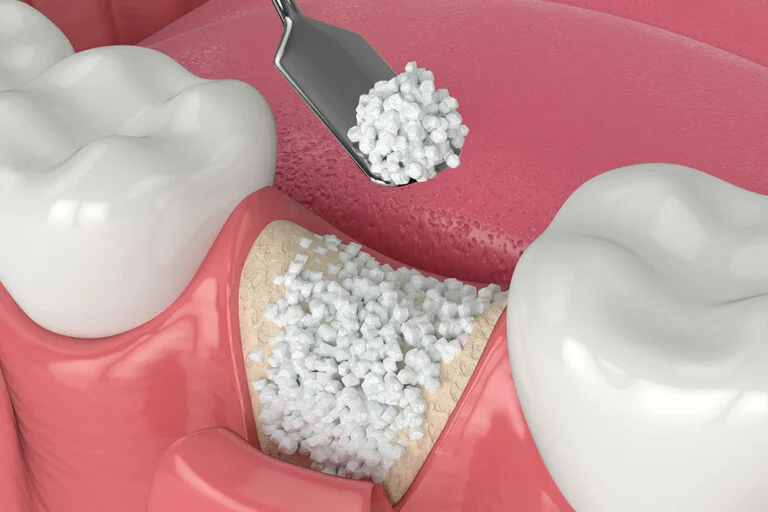
Graft material can come from a few sources, including carefully screened donor bone, processed animal bone, synthetic bone substitutes or a small amount of your own bone. Most of these work as a scaffold. Over the following months, your own bone grows into the area and gradually replaces the graft. Dr. Barnes will explain which material he recommends for your case and why.
Bone Grafting in Our Mustang Office
Dr. Barnes places bone grafts here at Buffalo Creek Dental. The two most common situations are:
- Socket preservation at extraction. When a tooth is removed, graft material can be placed right into the empty socket to limit shrinkage. It’s often the simplest way to save bone if you plan to get an implant later. Our tooth extraction page explains what to expect when a tooth comes out.
- Grafts to prepare for an implant. If the bone where an implant will go has thinned, a graft can rebuild it before or at the same time as implant placement.
Having your exam, graft and implant planned by the same dentist keeps your care simple and close to home. Larger or more complex grafts, such as with some full-arch cases, may be coordinated with the oral surgeon next door, and Dr. Barnes stays involved in your plan from start to finish.
What Healing Looks Like
Most people feel mild swelling and soreness for a few days, managed with over-the-counter pain relievers and cold packs. You may notice a few small granules of graft material in your mouth at first. That’s normal.
The bone itself needs time. Depending on the size and type of graft, it usually takes a few months before the area is ready for an implant. If the graft is placed at the same time as the implant, the healing happens together. Dr. Barnes will give you a timeline that fits your case.
Cost, Insurance and Financing
The cost of a bone graft depends on the type and size of the graft and whether it’s done alone or with other treatment. That’s why we don’t quote a fee before an exam. You’ll get a written treatment plan with every fee listed before anything begins. See our financing options, and ask about our current dental implant special.
Frequently Asked Questions
Do you do bone grafts in your office?
Yes. Dr. Barnes places bone grafts here in our Mustang office, including socket preservation grafts when a tooth is removed and grafts that prepare the jawbone for an implant. Larger or more complex cases, such as some full-arch treatment, may be coordinated with the oral surgeon next door.
Does a bone graft hurt?
The area is fully numbed during the procedure. Afterward, most people describe mild soreness for a few days rather than significant pain.
How long after a bone graft can I get an implant?
It depends on the graft. Some implants can be placed at the same visit, while larger grafts usually need a few months to heal first.
Can I avoid a bone graft?
Sometimes. Planning an implant soon after an extraction, or preserving the socket when a tooth is removed, can reduce the need for a larger graft later. For a full arch, All-on-4 implants are designed to make the most of the bone you have.
Is bone graft material safe?
Yes. Donor and animal-source materials are processed and sterilized to strict standards, and synthetic materials are made to be compatible with bone.
Thinking About Dental Implants?
If you’re missing a tooth or have been told you need a graft, we’ll review your imaging and explain your options clearly. Learn more about dental implants in Mustang, OK, and the ADA’s guide to implants. Then book online or call (405) 353-1333 to schedule a consultation with Dr. Jon Barnes.
Our office is at 201 S. Sara Rd., #140, Mustang, OK 73064, and we welcome patients from Mustang, Yukon, Tuttle and southwest Oklahoma City. Hours: Monday–Wednesday 8 a.m.–5 p.m., Thursday 7 a.m.–3 p.m., and Friday 8 a.m.–noon.



Comments are closed.