

Last updated · Dr. Jon Barnes, DDS
A tooth extraction in Mustang, OK is never welcome news. But extractions are routine dentistry, and when a tooth can’t be saved, removing it can be the first step toward ending pain. Here’s when extraction is the right call, what the appointment is like, and what tooth extraction recovery looks like so you heal well.
When Does a Tooth Need to Be Removed?
Extraction is a last resort — saving the tooth always wins when it’s possible. But some teeth are past the point treatment can reliably fix:
- Decay that’s gone too far. When a cavity has destroyed most of the tooth, even a crown may not have a foundation to hold onto.
- A crack that runs below the gumline. Fractures under the gum harbor bacteria and put the bone at risk.
- Advanced gum disease. When the bone and ligaments holding a tooth are severely damaged, the tooth can loosen beyond what treatment can stabilize.
- Crowding. Sometimes a tooth is removed to make room for orthodontic treatment — a planned part of straightening a smile.
- A failed root canal. When a previously treated tooth can’t be retreated, extraction becomes the sensible option.
- Impacted or problem wisdom teeth. We don’t remove wisdom teeth here; we refer these to an oral surgeon.
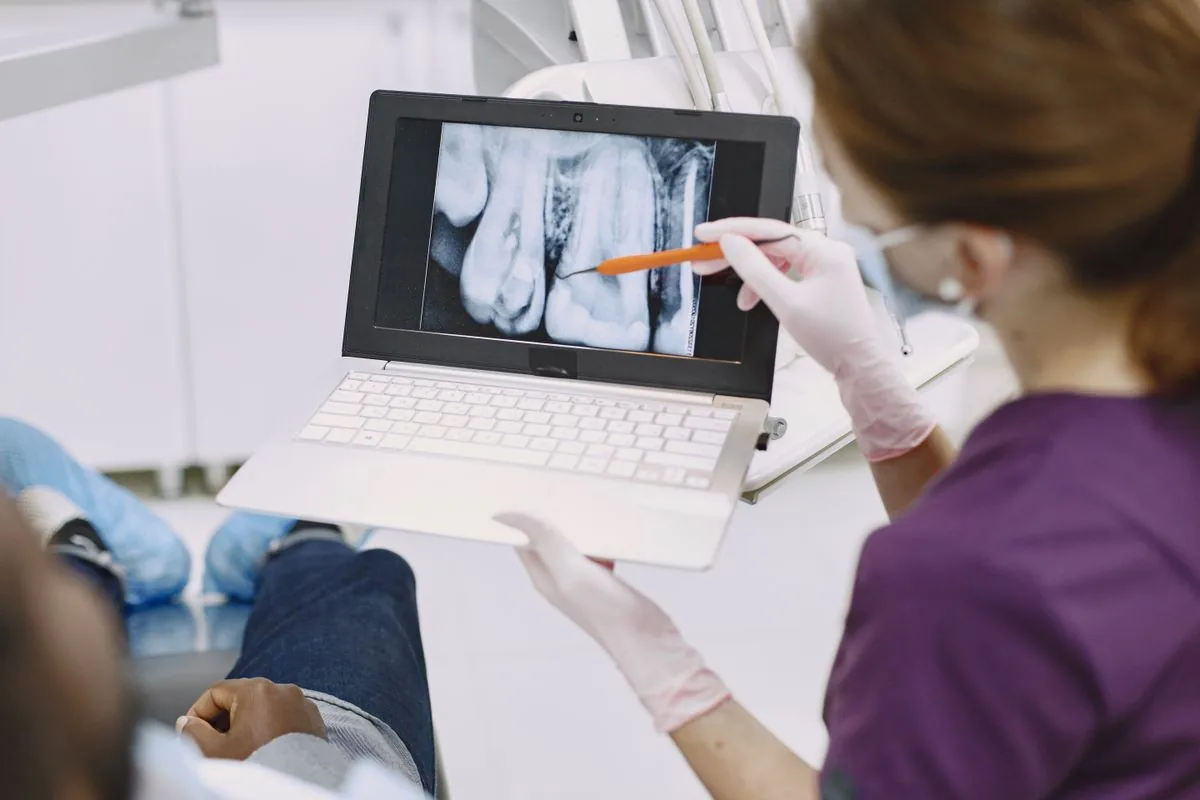
If Dr. Barnes recommends an extraction, he’ll explain why with your x-rays in front of you, so the reasoning is transparent.
Tooth Extraction vs. Root Canal: Which Is Right?
This is the decision point for most patients. A root canal in Mustang, OK saves a tooth by removing the infected tissue inside it; an extraction removes the tooth entirely. The general rule is straightforward:
- If the tooth can be saved with a reasonable long-term outlook, saving it usually wins. You keep your natural bite, avoid bone loss, and skip the need for a replacement.
- If the tooth is cracked below the gumline, has lost too much structure, or has bone loss around it, extraction is often the more honest recommendation — followed by a plan to replace the tooth.
We’ll walk you through both options so the choice is clear, not a sales pitch.
What Happens During a Tooth Extraction?
Most extractions are simpler and faster than patients expect:
- Exam and x-rays. Dr. Barnes examines the tooth and takes x-rays of the root shape and surrounding bone to determine whether it’s a simple or surgical extraction.
- Thorough numbing. Local anesthesia fully numbs the tooth and gum. You’ll feel pressure, not pain — and if you feel anything sharp, we can always add more anesthesia.
- The extraction. For a simple extraction, the tooth is gently loosened and lifted out in a few minutes. For a surgical extraction (for example, a tooth with broken roots), a small gum opening gives access, and the tooth may be sectioned for easier removal.
- Aftercare instructions. You’ll bite on gauze to help a blood clot form, then go home with clear written instructions.
Most simple extractions take 20 to 40 minutes. Surgical extractions take longer, but you’re numb the whole time.
Wisdom Teeth: We Evaluate and Refer
We don’t remove wisdom teeth in our office. Dr. Barnes will check your wisdom teeth at your exam with X-rays, and if they need to come out, we’ll refer you to an oral surgeon.
Tooth Extraction Recovery: How to Heal Right
The first few days determine how smoothly you heal:
- Bite on the gauze as instructed so a stable blood clot forms.
- No straws, no smoking, no vigorous rinsing for several days. Suction can dislodge the clot and cause a painful dry socket. This is the single most important rule.
- Ice the cheek — 20 minutes on, 20 minutes off for the first day to keep swelling down.
- Eat soft foods — yogurt, mashed potatoes, scrambled eggs, lukewarm soups (with a spoon, not a straw).
- Take pain relievers as directed. Over-the-counter ibuprofen or acetaminophen manages most post-extraction soreness.
- Keep it clean, gently. After 24 hours, gentle saltwater rinses help; brush your other teeth normally, avoiding the site.
- Rest the day of the procedure and skip strenuous exercise for a couple of days.
Mild soreness, light bleeding for a few hours, and swelling peaking around day two are normal. Call us at (405) 353-1333 if bleeding won’t stop, swelling worsens after day three, or pain escalates instead of fading. The American Dental Association’s guide to dry socket explains the warning signs in more detail.
Replacing the Tooth You Lost
An extraction solves the immediate problem, but a missing tooth lets neighboring teeth drift and the jawbone underneath shrink. That’s why we plan the replacement before the extraction whenever possible. The most common options:
- A dental implant. Dental implants in Mustang, OK are the closest thing to getting your natural tooth back — a titanium post fuses with the jawbone and supports a crown that looks and functions like a real tooth.
- A bridge. Anchors a replacement tooth to the teeth on either side.
- A partial denture. A removable option when several teeth are missing. See our guide to full vs. partial dentures.
In some cases, the extraction and implant planning can happen in the same treatment conversation.
Frequently Asked Questions
Does a tooth extraction hurt?
The area is fully numbed, so you should feel pressure, not pain. Afterward, soreness for a few days is normal and usually managed with over-the-counter pain relievers. Most patients are surprised by how manageable it is.
At what age should wisdom teeth come out?
There’s no magic age, but late teens to early twenties is the typical window. An evaluation with X-rays shows whether removal makes sense, and if it does, Dr. Barnes will refer you to an oral surgeon.
Can I drive myself home?
Yes. Because we use local anesthesia, you can drive yourself to and from the appointment — there’s no groggy recovery period.
What is a dry socket, and how do I avoid it?
A dry socket happens when the blood clot at the extraction site is lost too early. The best prevention: no straws, no smoking, no vigorous rinsing for the first several days.
Will I need time off work or school?
For a simple extraction, most people resume normal activities the next day. Surgical extractions may warrant a day or two of rest.
Talk to Us Before It Becomes an Emergency
A tooth that needs to come out rarely gets better on its own — and infected or broken teeth tend to pick the worst possible moment to demand attention. If you’re dealing with a tooth that hurts, don’t wait. Our emergency dentistry team sees urgent cases as soon as possible. Book online or call Buffalo Creek Dental at (405) 353-1333 to schedule an exam with Dr. Jon Barnes.
Our office at 201 S. Sara Rd., #140, Mustang, OK 73064 serves patients from Mustang, Yukon, Tuttle, and the greater Oklahoma City area. Hours: Monday–Wednesday 8 a.m.–5 p.m., Thursday 7 a.m.–3 p.m., and Friday 8 a.m.–noon.