
Last updated · Dr. Jon Barnes, DDS
If you’ve ever bitten into a tray of cold, gooey impression putty, you’ll appreciate digital dental impressions. Instead of putty, a small handheld scanner captures detailed 3D images of your teeth. At Buffalo Creek Dental in Mustang, OK, we use digital scans instead of putty impressions for crowns, dentures, Invisalign and sleep apnea appliances. Here’s how the technology works, how it compares with traditional impressions and what to expect.
What Are Digital Dental Impressions?
A dental impression is a precise copy of your teeth and gums. Your dentist and the dental lab use it to design restorations that fit your bite exactly.
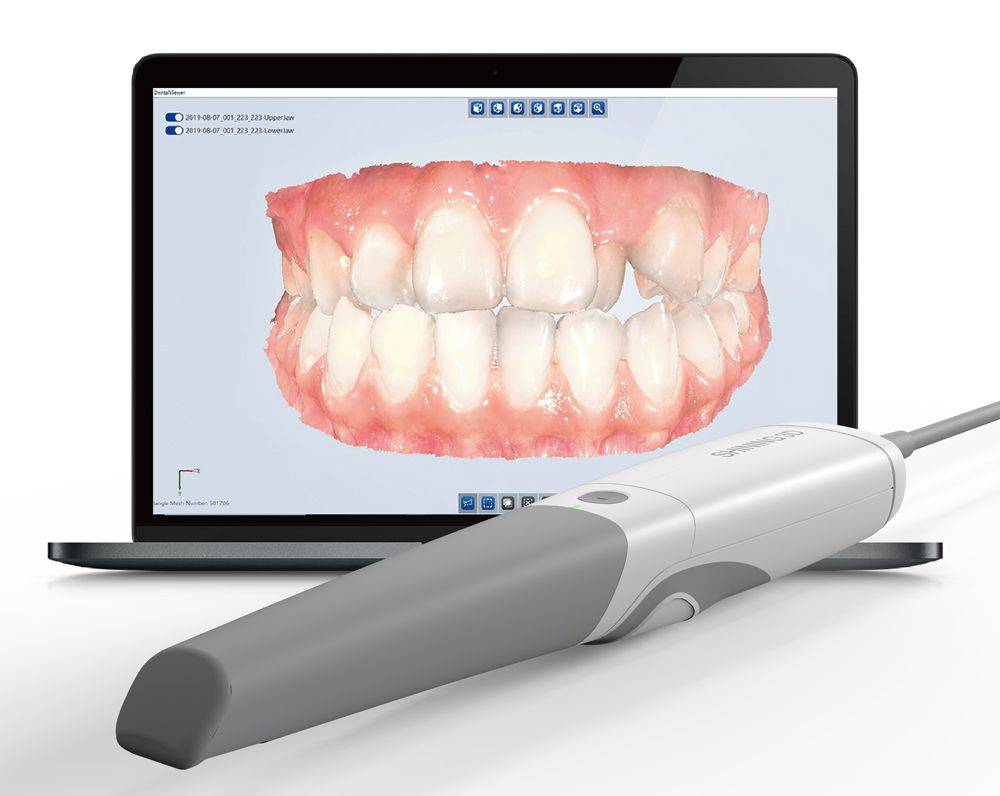
Traditional impressions use a tray filled with soft material that you hold in your mouth until it sets. Digital dental impressions do the same job with an intraoral scanner, a wand about the size of a thick pen with a tiny camera at the tip. As it moves over your teeth, it takes thousands of images and stitches them into a 3D model on a computer screen.
How the Scan Works
- Preparation. Your teeth are gently dried, because the scanner reads a dry surface best.
- Scanning. The wand is moved slowly over your upper teeth, lower teeth and the area being treated. You can breathe, swallow and pause normally.
- Bite record. You close your teeth together while the scanner captures how your upper and lower teeth meet.
- Review. The 3D model appears on the screen right away, so missing areas can be rescanned on the spot instead of starting over.
For most people, the whole scan takes just a few minutes.
Digital vs. Traditional Impressions
Both methods have been used for years, but digital scanning has clear advantages, which is why it’s how we take impressions for crowns.
More Comfortable
There’s no tray full of material and no waiting with your mouth full while it sets. That’s a big plus for anyone with a strong gag reflex, jaw soreness or dental anxiety.
Highly Detailed
The scanner captures fine details of each tooth and the gumline. Because the image appears on screen immediately, gaps or blurry areas can be fixed right away. With putty, a distorted impression often isn’t noticed until it reaches the lab.
Faster and Cleaner
Digital files can be sent to the dental lab electronically, so there’s nothing to pack, ship or remake because it was damaged in transit. That can mean fewer retakes and fewer surprises when your restoration arrives.
Easier to See and Understand
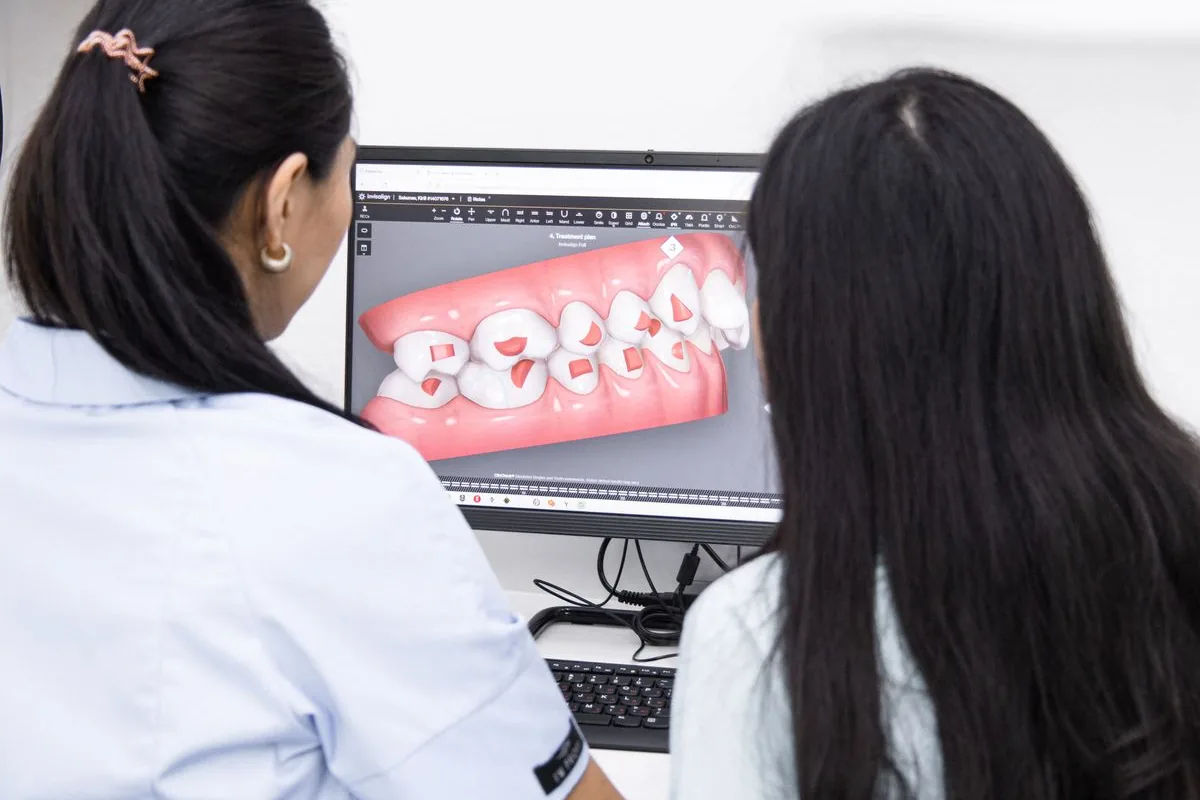
Seeing your teeth in 3D on a large screen makes it easier to understand a cracked tooth, a worn filling or a bite problem. Many people find that helpful when they’re deciding on treatment.
What Digital Impressions Are Used For
Depending on your treatment, a digital scan may be used to plan or make:
- Crowns and bridges
- Crowns that go on top of dental implants
- Veneers
- Clear aligner treatment such as Invisalign
- Night guards and other custom appliances
Why Accuracy Matters for Your Restoration
A crown or bridge that fits precisely is more comfortable, easier to keep clean and less likely to let bacteria seep in at the edges. A poor fit can lead to sensitivity, a “high” bite or decay under the restoration. Good records are the first step toward a restoration that lasts. If you want to learn more about crowns themselves, MedlinePlus has a clear overview of dental crowns.
What to Expect at a Crown Visit
Here’s how digital dental impressions fit into a typical crown appointment:
- Numbing and preparation. The tooth is numbed, any decay or old filling material is removed, and the tooth is shaped so the crown can fit over it.
- Scanning. The prepared tooth, the teeth around it and your bite are scanned.
- Temporary crown. A temporary crown protects the tooth while your permanent crown is made.
- Final fit. At your next visit, the permanent crown is checked for fit, color and bite, then cemented in place.
Our front office team will let you know how long each visit takes so you can plan your day. If you’re nervous about dental work, ask about laughing gas.
Frequently Asked Questions
Does a digital dental scan hurt?
No. The scanner simply glides over your teeth and doesn’t touch your gums in any uncomfortable way. Most people find it far easier than a putty impression.
Is the scanner safe?
Yes. An intraoral scanner uses light and a camera to take pictures. It doesn’t use X-rays or radiation.
Can I have a digital scan if I have a strong gag reflex?
Yes, and it’s one of the main reasons people prefer digital impressions. There’s no bulky tray, and you can take breaks during the scan whenever you need to.
How long does a digital impression take?
Usually just a few minutes for the scan itself, depending on how many teeth are involved.
Will my insurance cover a digital impression?
Impressions are normally part of the treatment they’re used for, such as a crown, rather than a separate charge. Our front office team can check your dental insurance benefits for your planned treatment.
Need a Crown or Bridge in Mustang?
If you have a cracked tooth, a large old filling or a missing tooth, we’ll walk you through your options and what to expect. Book online or call Buffalo Creek Dental at (405) 353-1333 to schedule an exam with Dr. Jon Barnes.
Our office is at 201 S. Sara Rd., #140, Mustang, OK 73064, and we see patients from Mustang, Yukon, Tuttle and southwest Oklahoma City. Hours: Monday–Wednesday 8 a.m.–5 p.m., Thursday 7 a.m.–3 p.m., and Friday 8 a.m.–noon.


Comments are closed.